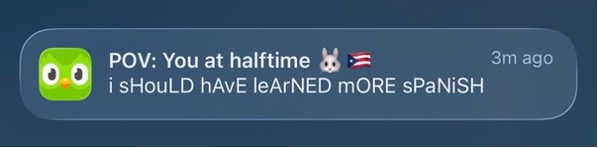
A month ago, this push lit up my screen.
Odd. Since I wasn’t learning Spanish. Then it clicked: fresh buzz about Bad Bunny at next year’s Super Bowl halftime. Hint: Look at the emojis – Bunny & Puerto Rico! Duolingo wasn’t talking to me, it was talking to the moment. And that my pals, is a lesson in topical marketing i.e meet culture where it is. I’m all for it, and frankly, more brands should be.
Another moment: when the TikTok ban chatter spiked in the US. Duolingo dropped five words, perfectly in character, that joined the conversation and nudged the behavior. Same formula as halftime push.
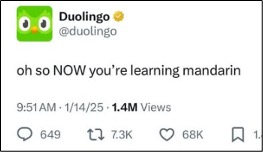
So what is the game and why Duolingo is the champion you will ask. In case of Duolingo, a meme isn’t the ultimate goal; it’s the starting point for engagement. When a five-second TV spot or halftime rumor hits, they sync push notifications, streak savers, and in-app gamifications to fire right then. Attention is the name of the game and Duolingo sure is a winner.
Duo’s voice: chaotic and boldly unhinged, allows the brand to jump on trends without feeling off-brand. Characters move faster than corporate tone and that is why they lead to zero brand-safe stiffness.
Utility > meme (always!) Topical content sticks when it helps you do something. Duolingo seems to be pairing hype with homework: High Valyrian around House of the Dragon or K-vocab during big Korean drama drops. You laugh, then you learn, then you log a session. That’s the conversion path.
The topical marketing lesson in halftime push isn’t really about being first to a joke. When everyone’s glued to their screens during a big moment, like halftime, that’s when you jump in with something fun and easy to click. It’s all about making something small but useful, delivered in a real way, and seeing if people connect with it. It basically is – ship a tiny piece of utility tied to a cultural moment, deliver it in an authentic voice, and grade your brand on that habit formation. That’s the playbook!