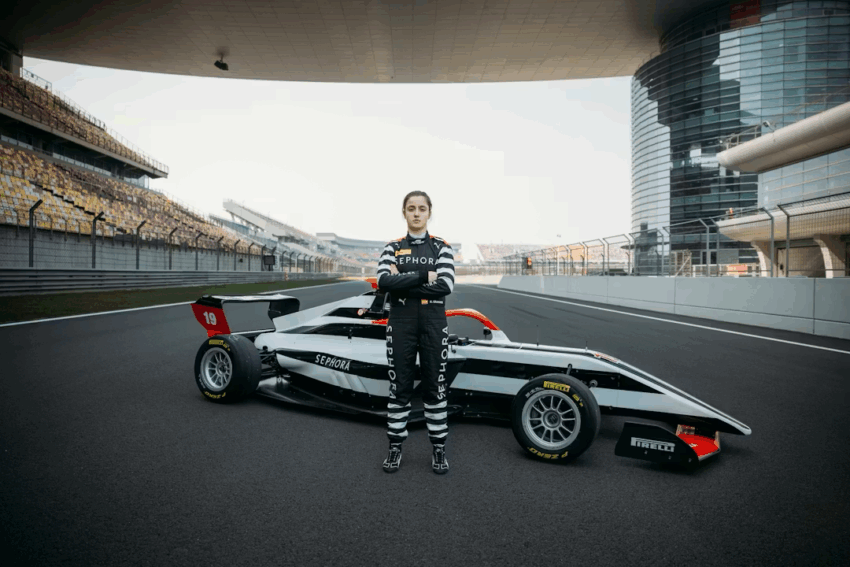
When a Beauty brand walks into a racetrack, it isn’t an accident.
Let’s talk about the recently announced Sephora and F1 academy global partnership for the 2026 season. It came with all the bells and whistles – Glam Bars at 18 Grands Prix. A sponsored driver. And trackside fan activations. On the surface, it looked like a fun, unexpected crossover. But this was one of the most strategically layered deals in recent marketing memory.
This goes deeper than Sephora
I will give you four letters – L-V-M-H. If you didn’t know already, Sephora is owned by LVMH, the same conglomerate that has been F1’s Global Luxury Partner since 2025. When Tag Heuer replaced Rolex as the official timekeeper, that marked the beginning (or return) of LVMH’s activation in the race. So when Sephora walks into F1 academy, it’s not a beauty brand taking a fun swing, it’s LVMH spreading its footprint.
Think of it less like a sponsorship and more like a portfolio strategy. Each brand in the LVMH family covering a different tier of the F1 experience, a different type of fan, a different cultural moment. That’s brand architecture.
The audience that wasn’t supposed to be there
Hello fresh stats! This is the part that is genuinely fascinating. Three out of every four new Formula 1 fans in 2025 were female. Let me tell you how important this is. In a sport historically associated with male-dominated grandstands and oil-stained mechanics, the fastest-growing audience segment is women — and specifically, younger women. Women now represent 42% of F1’s total audience, up from 37% in 2018 — with 43 million new female fans joining in 2025 alone. The average female fan is 30 years old, compared to 43 for male fans. The sport is getting younger, and women are leading that charge.
Sephora’s VP of Marketing Partnerships, Celessa Baker, was refreshingly honest about this: they heard that young women were watching F1, and the question became simply — how do we get into that space?
What’s easy to miss here is that this wasn’t about just writing a check for Sephora. They followed their customer — heard that young women were already watching F1, already showing up at races, already building communities around the sport online. And those women? They weren’t waiting for an invitation. They walked into one of the most male-dominated sporting cultures in the world and made it theirs, on their own terms, in their own way. The partnership ratified something that was already happening. That’s the difference between a brand that enters a cultural space and one that chases it.
So what’s the lesson?
Here’s what I’d take away from all of this.
The brands winning in 2026 aren’t the ones asking “does this make sense for our category?” They’re asking “does this make sense for our people?” Those are very different questions, and the gap between them is where most marketing plays it too safe.
For Sephora and F1 Academy, that truth is simple: showing up confidently in spaces that weren’t originally built for you. Whether that’s a race grid or a beauty counter, the energy is the same.
Find your version of that truth. Then follow it, even if it takes you somewhere unexpected.
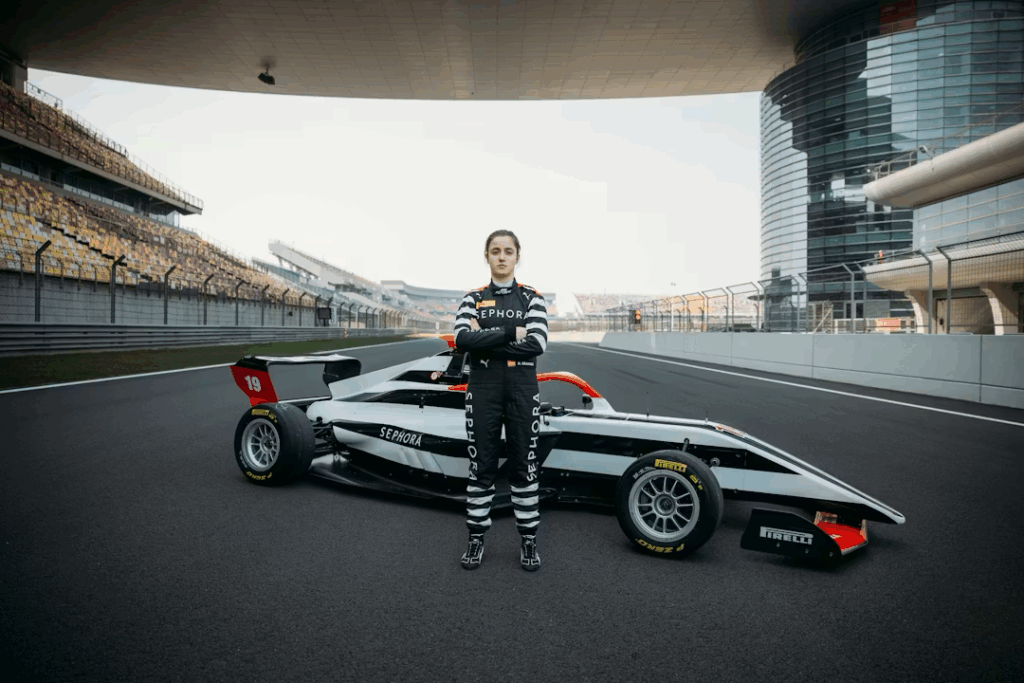
Image courtesy: LVMH. Featuring Spanish driver Natalia Granada, who joins the 2026 F1 ACADEMY™ grid for her rookie season.